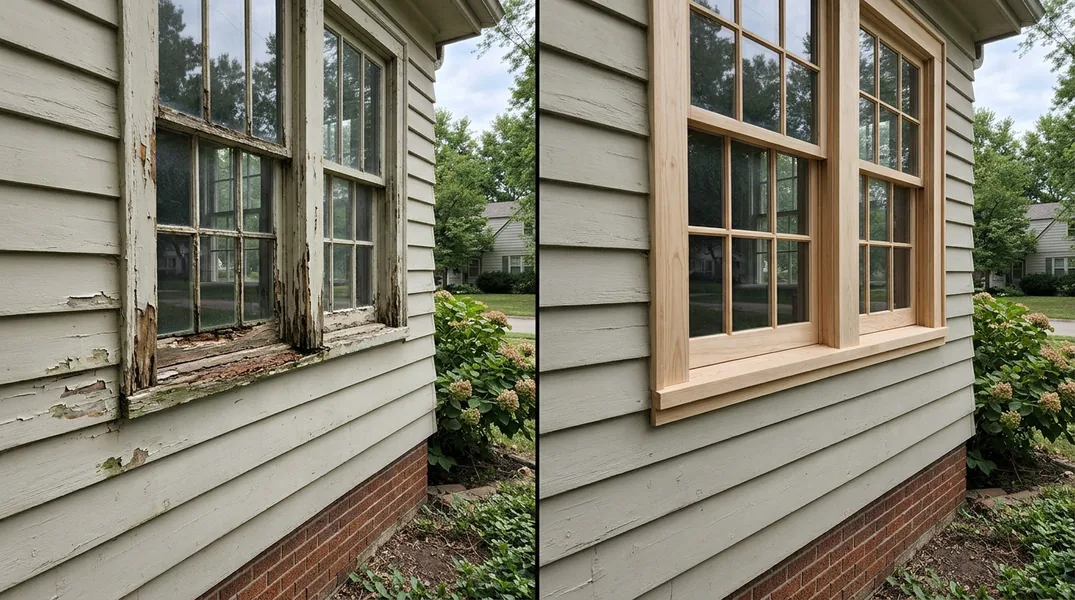
Olathe's Climate: The Perfect Storm for Wood Damage
Olathe homeowners face a unique challenge when it comes to protecting their properties from wood damage. The Kansas climate, with its dramatic seasonal swings, creates conditions that are almost tailor-made for wood rot and structural deterioration. Winter temperatures can plummet well below freezing, while spring thaws bring moisture and humidity that seep into wood fibers. This freeze-thaw cycle is one of the most destructive forces affecting homes in the region.
When water enters wood during warm, wet months and then freezes solid during winter, it expands and contracts repeatedly. This mechanical stress fractures the wood from the inside out, creating tiny pathways for moisture and fungal spores to penetrate deeper into the material. Unlike a single catastrophic event, this damage accumulates year after year, often going unnoticed until the structural integrity of your home is already compromised. Many Olathe homeowners don't realize how vulnerable their properties are until they spot soft spots on siding, sagging floors, or that telltale musty smell in the basement.
Hardboard Siding Rot: Why Your Exterior Is Failing
Hardboard siding was once considered a durable, low-maintenance alternative to wood, and many homes built in the 1980s and 1990s were clad with it. Unfortunately, hardboard has proven to be far less weather-resistant than manufacturers promised. The material is essentially compressed wood fibers bound with resin, which means it absorbs moisture like a sponge. Once water penetrates the surface, it spreads through the entire panel, and the rot process accelerates rapidly. In Olathe's humid summers and wet springs, hardboard siding becomes a liability rather than an asset.
The problem worsens at vulnerable points: joints between panels, areas around windows and doors, and anywhere the protective paint coating has cracked or peeled. Water works its way behind the siding and attacks the wood sheathing and framing underneath. By the time you notice soft spots, paint bubbling, or sections that crumble when touched, significant structural damage has likely already occurred. This is why Wood Rot & Dry Rot Repair is so critical for homes with aging hardboard siding. Addressing the problem early can prevent costly repairs to the framing, insulation, and interior walls behind the siding.
Termite Damage Repair Near Me: A Hidden Threat in Kansas
While freeze-thaw cycles and moisture are obvious culprits, many Olathe homeowners underestimate the threat posed by termites. Kansas is home to several termite species, and the warm, humid conditions that develop in spring and summer create ideal breeding grounds. Termites work silently, often for years, consuming the wood structure of your home from the inside out. Unlike surface rot that you can see and feel, termite damage can be almost invisible until it reaches a critical stage.
The most dangerous aspect of termite infestation is that the wood remains structurally sound on the outside while being hollowed out internally. A beam or joist can look completely normal but be incapable of bearing its intended load. This is why professional inspection is essential, and why Termite Damage Repair requires both pest control and structural restoration. If you suspect termite activity or have noticed mud tubes along your foundation, soft wood in your crawl space, or unexplained wood damage, it's time to call a professional. The longer you wait, the more expensive the repairs become, and the greater the risk to your home's structural safety.
Where Wood Rot Strikes First: Foundation, Floors, and Framing
Wood rot doesn't strike randomly. It follows moisture, and in most homes, moisture accumulates in predictable locations. The most common areas where wood rot develops are around the foundation, in crawl spaces, and in basement rim joists where the house structure meets the concrete foundation. These areas are naturally prone to moisture because they're closest to the ground, where water pools and humidity remains high year-round. If your home has a crawl space, you're especially vulnerable. Without proper ventilation and moisture barriers, crawl spaces become damp caverns where wood rot thrives unchecked.
Upper floors and roof framing are also at risk, particularly around plumbing penetrations, roof leaks, and areas where exterior walls meet the roof line. Water from roof leaks or ice dams can soak into framing for weeks before it becomes apparent that a problem exists. Floor Joist & Subfloor Repair is one of the most common services needed in older homes because these structural elements bear the weight of the entire building. If floor joists become compromised by rot, the entire floor can sag, creating uneven surfaces, cracked drywall, and doors that no longer close properly. In severe cases, the structural integrity of the home is threatened, making professional repair an urgent necessity rather than an optional upgrade.
Wood Rot & Dry Rot Repair Cost in Olathe: What to Budget
The cost of wood rot repair varies dramatically depending on the extent of the damage, the location, and the structural systems involved. A small area of surface rot on exterior trim might cost a few hundred dollars to repair, while extensive rot affecting floor joists, beams, or load-bearing walls can easily run into the thousands. The key factor is how early you catch the problem. Damage caught in its early stages, when it's still confined to a small area, is far less expensive to repair than damage that has spread throughout multiple structural members. This is why regular inspections and prompt action are so valuable for protecting your investment.
For an accurate assessment of what your specific situation will cost, you need a professional evaluation. Olathe Carpentry offers a free estimate so you can understand exactly what repairs are needed and what you should budget. During the inspection, a professional can identify not just the visible rot but also hidden damage that hasn't yet surfaced. They can also advise on whether Beam Replacement & Load-Bearing Wall Removal will be necessary or whether more targeted repairs will suffice. Getting a professional assessment is the only way to avoid nasty surprises and plan your repairs strategically.
Protecting Your Home: Prevention and Early Detection
The best defense against wood rot is prevention combined with early detection. Start by maintaining your home's exterior: keep gutters clean and flowing properly, ensure downspouts direct water at least 4 to 6 feet away from the foundation, and inspect siding regularly for cracks, peeling paint, or soft spots. Seal any gaps around windows, doors, and penetrations where water can enter. Inside, maintain good ventilation in crawl spaces and basements, use a dehumidifier if moisture levels are consistently high, and address any plumbing leaks immediately. These simple steps prevent the moisture conditions that allow rot to develop.
Early detection saves money and prevents structural failure. Walk the perimeter of your home twice a year, press on siding and trim with a screwdriver to check for soft spots, and look for signs of water intrusion. Check your basement and crawl space for musty smells, visible mold, or discolored wood. If you notice any warning signs, contact Olathe Carpentry at (913) 355-6186 to schedule an inspection. A professional can identify problems you might miss and recommend repairs before minor issues become major structural crises. Don't wait until your home is visibly damaged. Proactive maintenance and early professional intervention are your best investments in long-term home health and safety.
Looking for a professional carpentry contractor in Olathe? Olathe Carpentry responds fast for all your carpentry needs.
Get a Free QuoteOur services: Wood Rot & Dry Rot Repair · Termite Damage Repair · Floor Joist & Subfloor Repair