Carpenter in Olathe, KS: Wood Rot, Structure & Finish Work
Olathe Carpentry is a local residential carpentry shop serving homeowners across Olathe, Overland Park, Lenexa, Shawnee, and Lawrence. We work on the full range of wood carpentry: structural repairs to joists, beams and framing; rot and insect damage to siding, sills and deck ledgers; and finish work including trim, doors, cabinets and custom built-ins. We know the building stock here, Victorian and Folk houses in Original Town with wood porches and tall sash windows, brick-and-frame ranches from the 1950s and 60s, split-levels and raised ranches with cedar shakes and big decks, and the newer reverse story-and-a-half ranches spreading west toward Cedar Creek. We understand how a century of settling, heavy clay soils, and four-season weather have shaped these homes.
When a homeowner in Olathe searches for a carpenter near me, they often find us because they have discovered wood rot in siding or fascia, a soft spot in a deck frame, a floor that has gone bouncy or out of level, or termite damage found after a pest inspection. These are the moments that matter. We come out to look at the wood itself, explain what we find, and give you an honest assessment of whether repair makes sense or replacement is the right answer. Call (913) 355-6186 to schedule a free wood rot inspection, or reach out with questions about any carpentry work on your home.
Why Wood Fails in Olathe, and How We Read It
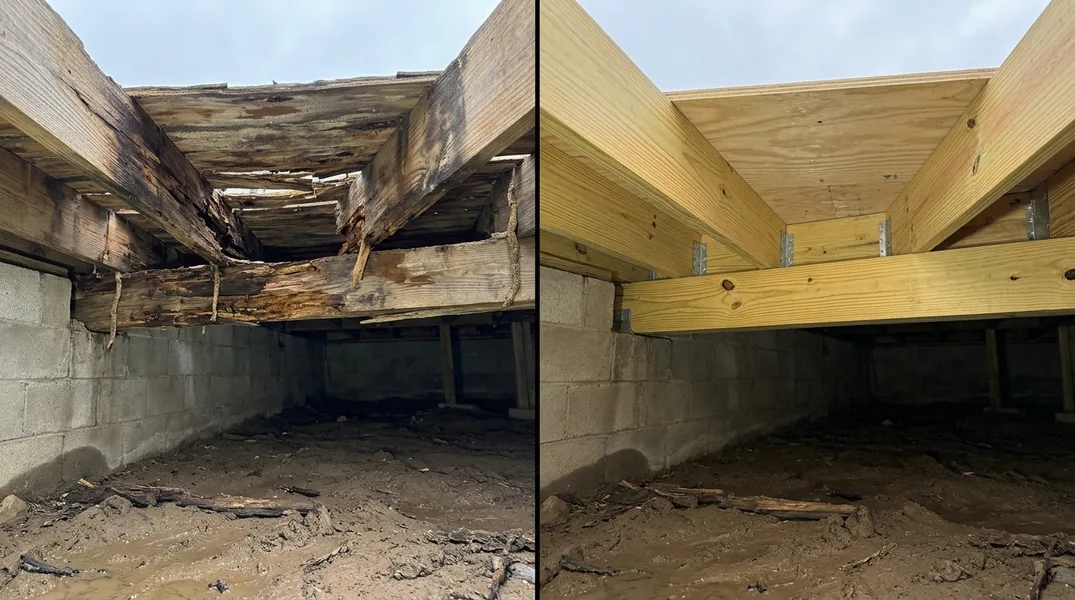
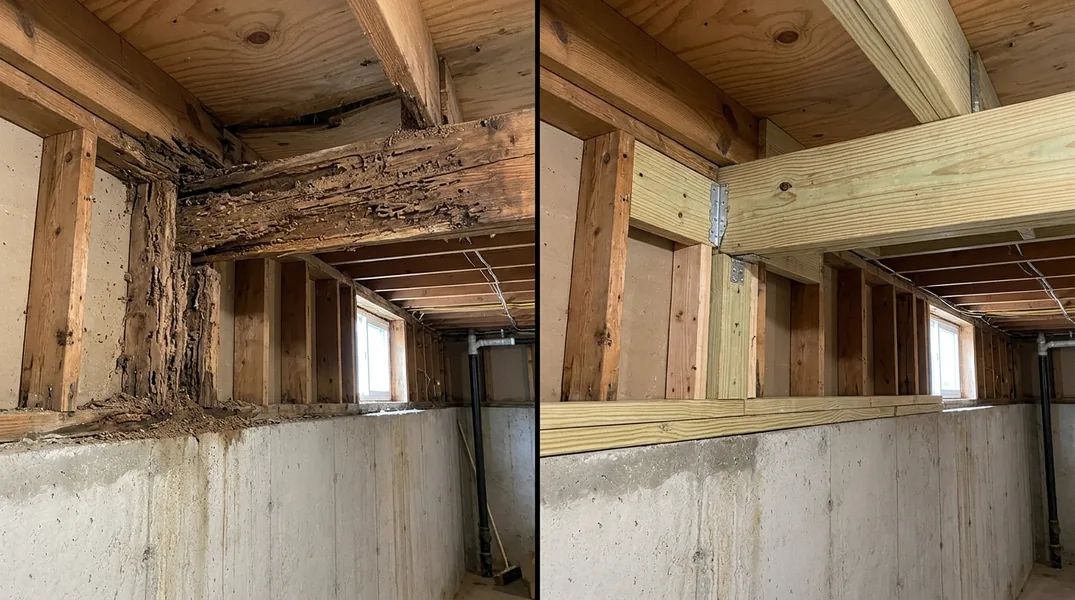
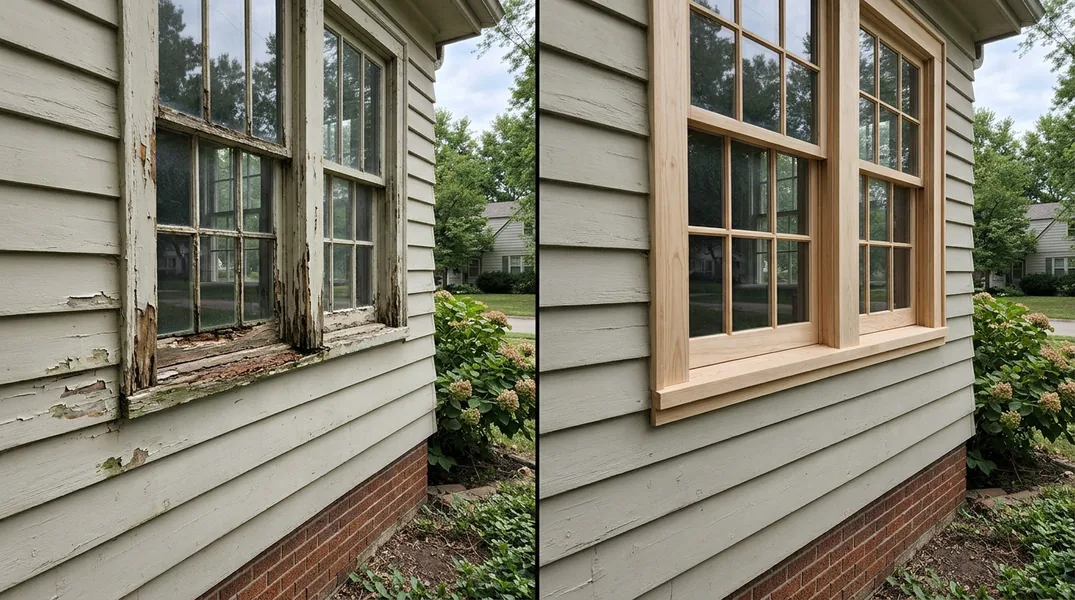
Wood fails in this climate for specific reasons, and they are worth understanding. Dry rot is not a water-logged condition but a fungus that grows slowly in wood held at sustained moisture, the kind of steady dampness that Johnson County's heavy clay soils and our long freeze-thaw winters create in sill plates, rim joists, and the underside of fascia boards where gutters overflow or downspouts drain poorly. Wet rot appears at thresholds, window sills, and deck ledgers where water pools and sits. Termites and carpenter ants follow the dampness, hollowing out the interior of a joist or header while the paint film on the outside still looks intact. The wood feels soft when probed, or a screwdriver sinks in where it should stop. The key is always to find where sound wood begins, to check the framing behind the visible surface, and to trace the water path that fed the decay. If that path is not closed, the repair fails again within a few years.
We assess rot by probing and by looking at the section of wood that remains. If a member has lost significant depth or width to decay, it gets replaced. If the decay is cosmetic, surface softness on a sound core, we cut it out, rebuild the profile, and close off the water source. Filler over rot is not a repair; it is temporary concealment. On termite and beetle damage, we work from your own pest inspection report. Our job is to make the framing sound again.
The honest call is this: look at the damage soon, but do not panic. A soft spot in a deck ledger or rot under a window sill is common in this climate and fixable. What matters is getting it addressed before the decay spreads deeper into the framing. Call (913) 355-6186 or request a free wood rot inspection so we can see what you are dealing with and give you a clear price for repair or replacement.
Structural Carpentry in Olathe: Joists, Beams and Settling
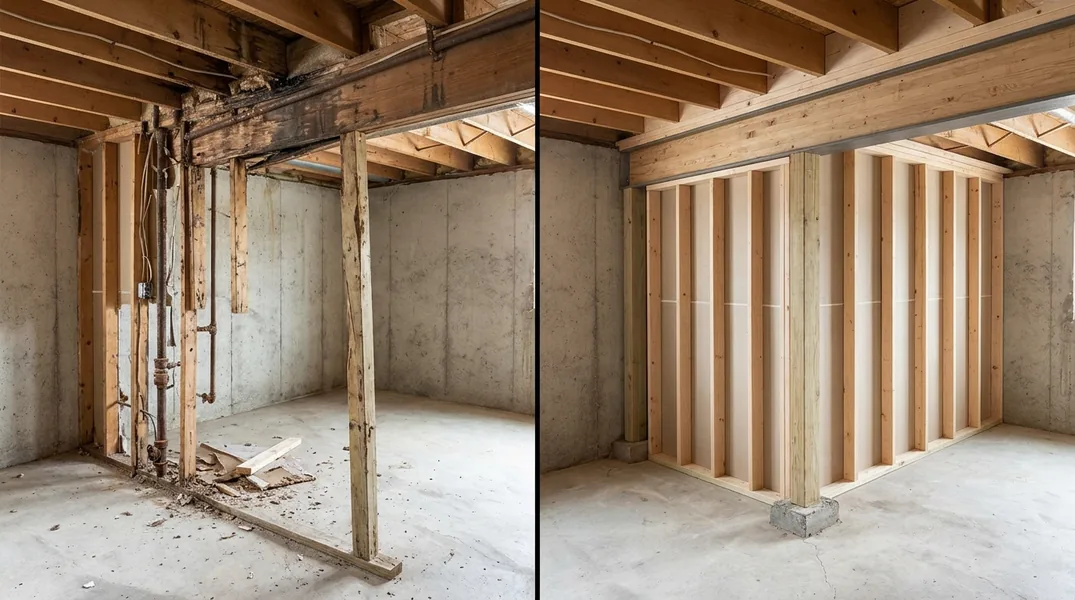
Structural carpentry in Olathe homes often means reading what decades of settling have done and deciding what needs to stay, what needs to be reinforced, and what needs to come out. A soft or bouncy floor is usually a failed joist or subfloor section, not a foundation problem. We sister a joist to a sound one alongside it, or replace the section if too much wood is gone. Sill plates and rim joists at the basement perimeter are common trouble spots, they sit on concrete and absorb moisture from the clay, and we cut out the bad section and sister or replace it with pressure-treated lumber. A sloping floor in a hundred-year-old house is often just the normal settlement of time; what matters is whether the member is still sound where it bears and whether the slope is stable or still moving. We can tell the difference by looking.
Beam replacement and load-bearing wall removal are bigger undertakings. Beam sizing and load-bearing alterations commonly require drawings from a licensed structural engineer and a permit from the local building department. We build to those engineered drawings; we do not produce them. The same applies to structural framing work that alters the skeleton of the house. If you are considering opening up a wall or replacing a beam, we can walk you through the process and build what the engineer specifies, but the engineering and the permit are not our work.
Finish Carpentry and Built-Ins in Olathe Homes
Finish carpentry is where a house becomes a home. We install casing around doors and windows, baseboard and crown molding, wainscoting, and custom built-ins that fit the spaces and the style of your home. On older Olathe houses, the original millwork often deserves to be matched rather than replaced, a coped joint where two pieces of crown meet looks better and lasts longer than caulk over a butt joint, and scribing a baseboard to a wall that is neither flat nor plumb is craft work that shows. We hang interior doors and exterior doors, install cabinets and vanities, build custom built-ins and shelving, and repair or replace stairs and railings. The work is visible every day, so it has to be honest.
Many Olathe homes have the floor plans and openings of their era, bay windows, compact rooms, out-of-square openings, and finish carpentry has to work with what is there rather than impose a template. We match profiles to existing trim, hold consistent reveals, and make the details work even when the walls are not plumb. This is the difference between carpentry and assembly: we read the house, not just the plans.
Permits, Repair-or-Replace & What We Do Not Do
Permits and inspections are part of doing carpentry work honestly. In most jurisdictions, a permit is commonly required for structural work such as removing or altering a load-bearing wall, replacing beams or floor joists, and adding or modifying exterior decks. Requirements vary by location and by the scope of work, so you will need to verify with your local building department before starting. We are fully insured, and we build to code and to any engineered drawings that the work requires. If your project involves a claim to your homeowner's insurance, we can help you document the damage; however, insurance coverage and claim approval are between you and your carrier.
The decision between repair and replacement comes down to a few facts: how much sound wood remains in the member, whether the water source that caused the damage can be closed off, and what the two options cost. When both are real choices, we quote both and let you decide. If the wood is too far gone, replacement is the honest answer. Requirements vary, always verify with the Olathe building department before starting your project. To discuss your carpentry needs and get a clear estimate, contact us today.