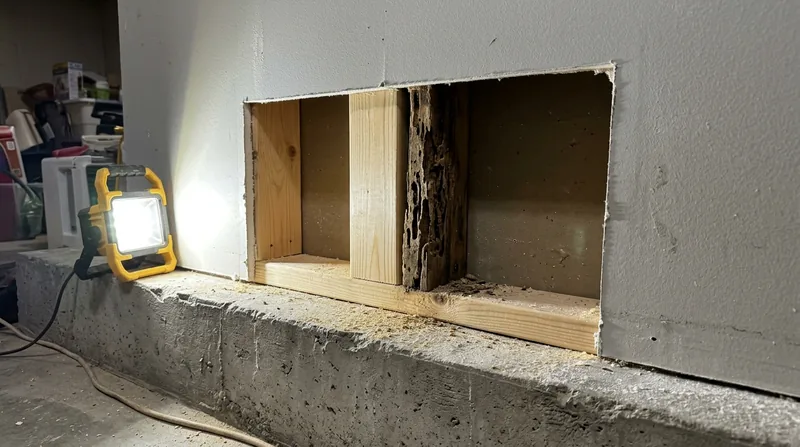




Eastern subterranean termites work quietly through the basement framing and sill plates of Olathe homes, leaving damaged wood that poses real structural risk long after the pest inspector leaves. The heavy clay beneath our 1950s ranches, split-levels, and newer walkout basements stays damp through freeze-thaw cycles and spring storms, creating the exact conditions termites prefer. Termite damage repair in Olathe means replacing the studs, sills, rim joists, and subfloor sections that have been hollowed out, restoring full structural integrity to your home. We work from your pest inspection report, remove and replace compromised wood, and leave you with solid framing again. Unlike pest control (a separate trade), we handle the carpentry: the damage that remains after treatment.
Why Termite Damage Repair Matters in Olathe Basements and Crawl Spaces
Olathe's residential stock sits on full basements dug into expansive clay that swells when wet and shrinks in drought. This cycle keeps rim joists and sill plates damp year-round, and eastern subterranean termites exploit that moisture. A pest inspection catches the infestation, but the wood they've eaten remains soft, weakened, or hollow. Leaving that damage in place means your floor joists lose bearing capacity, your sill plate no longer ties the wall to the foundation securely, and settlement or sagging can follow. The longer damaged wood stays in place, the more secondary rot and moisture damage spreads into adjacent studs and subfloor.
- We remove termite-damaged studs and sill plates and install solid pressure-treated or Douglas fir replacements.
- We sister compromised floor joists with new framing bolted alongside the old, restoring full load capacity.
- We replace sections of subfloor and rim joist where termite galleries have left the wood too soft to support weight.
- We document the repair work and scope for your insurance claim, helping you recover costs where coverage applies.
Addressing termite damage promptly prevents secondary failure and keeps your home's structural system intact.
Key info: Termite damage in basement rim joists and sill plates is common across Johnson County, especially in homes built before 1980 where pressure-treated framing was less standard. The damage is not always visible from above, which is why a thorough pest inspection report is your roadmap for repair scope.
For more on structural wood damage, see our wood rot and dry rot repair service, which addresses similar moisture-driven failures.
How We Repair Termite Damage in Olathe Homes: Step by Step
Our approach is straightforward: we inspect the damage reported in your pest inspection, remove the compromised wood, and install new framing that meets current building standards. We work in basements, crawl spaces, and rim joist areas where termites typically enter. The goal is to restore structural integrity so your home sits solid and level again, and so no secondary moisture or rot can take hold in the newly installed wood.
- We review your pest inspection report to map the extent of termite activity and wood damage.
- We expose the damaged framing by removing drywall, flooring, or trim as needed to see the full scope.
- We cut out the termite-eaten wood, taking care not to compromise adjacent sound framing.
- We install new pressure-treated lumber or solid Douglas fir, securing it with bolts, nails, or sister-bolting as the repair calls for.
- We restore any flooring, drywall, or trim we removed, leaving the area finished and ready to use.
Structural repairs in basements often require a permit from the City of Olathe Building Department; we help you understand whether your scope needs one and support the permit process.
Local example: A 1960s ranch in east Olathe with a damp basement had termite damage in the rim joist and three floor joists. We removed the hollow rim joist section, installed a new pressure-treated replacement, and sistered the three joists. The floor stopped sagging, and the homeowner recovered most of the cost through their homeowner's insurance claim.
See our floor joist and subfloor repair service for more on sistering and joist restoration.
Repair Methods and When We Use Them
| Approach | Description | Best For |
|---|---|---|
| Full Removal and Replacement | Cut out all termite-damaged wood and install new pressure-treated or solid framing in its place. | Sill plates, rim joists, and studs that are hollow or soft throughout. |
| Sister Joists | Install a new joist bolted alongside a damaged joist to restore load-bearing capacity while keeping the original in place. | Floor joists with localized termite damage or galleries that don't run the full length. |
| Partial Section Replacement | Remove only the section of a beam or joist that is damaged, splice in new wood, and secure with bolts or steel plates. | Rim joists or beams where damage is concentrated in one area and the rest of the member is sound. |
| Subfloor Patching | Remove soft or hollowed subfloor sections and install new plywood or OSB, securing to sound joists. | Subfloor damage localized to a few square feet in a basement or crawl space. |
Termite Damage Repair Cost in Olathe: What to Expect
Termite damage repair in Olathe typically starts at around $1,200 for a localized repair such as a single rim joist section or a few sistered joists in an accessible basement. The actual cost depends on how much wood is damaged, how easy it is to access, whether the repair requires a permit, and whether the job involves structural work that calls for a licensed structural engineer. A full sill plate replacement or multiple joists can run $3,500 to $8,000 or more. Getting two or three estimates from local carpenters is the best way to understand your specific job and compare pricing.
Several factors move the price up from that starting point. Damage that extends across multiple rim joists or a long section of sill plate requires more labor and material. Basements with low headroom or cluttered storage make access slower. If your repair involves removing a load-bearing wall or significantly altering framing, a structural engineer may be required to size beams and sign off on the design, adding engineering cost and a building permit. Homeowner's insurance often covers termite damage repair if the infestation was not pre-existing; we can help document the damage and scope for your claim.
For a detailed breakdown of our pricing across all services, visit our full pricing overview. Call us at (913) 355-6186 for a free, no-obligation estimate on your specific damage.
Termite Damage Repair Near Me: What to Look for When Hiring a Carpenter in Olathe
Finding the right contractor for termite damage repair means checking three things: that they are fully insured and can show you a current certificate, that they understand structural carpentry and can read a pest inspection report, and that they will give you a detailed written estimate before starting work. Ask for references from recent repairs in Olathe or nearby Overland Park, Lenexa, or Shawnee. Many repairs in older homes near the original Olathe courthouse square or in the 1950s ranch neighborhoods involve structural work that requires a permit; make sure your contractor is comfortable working with the City of Olathe Building Department and can explain whether your job needs one.
- Verify that the contractor is fully insured with current general liability and workers' compensation coverage.
- Ask whether the repair scope requires a permit and confirm the contractor can obtain one or work with your building department.
- Request a written estimate that breaks down labor, materials, and any engineering or permit costs separately.
- Check references from at least two recent termite damage or structural repair jobs in Johnson County.
- Confirm that the contractor will work from your pest inspection report and explain exactly which wood will be removed and replaced.
A good local carpenter will explain the repair honestly, show you the damaged wood, and answer your questions about why the approach makes sense. If your home is in a historic district or subject to HOA rules, ask whether any exterior or visible repairs need approval before work begins.
Ready to get started? Contact us for a free estimate or call (913) 355-6186.
Termite Damage Repair in Olathe: Pricing Guide
| Service | Price | Details |
|---|---|---|
| Single rim joist or sill plate section repair | Starting at $1,200 | Removal and replacement of one localized termite-damaged section in an accessible basement or crawl space |
| Multiple joist sistering or partial rim joist replacement | Starting at $2,800 | Repair of two to four joists or a longer rim joist section; includes bolting, hardware, and new pressure-treated lumber |
| Full sill plate replacement or extensive basement framing repair | Starting at $5,500 | Multiple members damaged; may include permit, engineering review, and restoration of drywall or flooring after repair |
| Structural engineering consultation and permit coordination | On estimate | Required when repair alters load paths or involves load-bearing walls; engineer sizing and permit fees vary by scope |
| Travel and site visit | Included | No separate mileage or travel fee for estimates and repairs throughout Olathe and surrounding Johnson County |
| Free estimate and damage assessment | Free | Response within 24 hours at (913) 355-6186; detailed written estimate provided with no obligation to book |
Indicative pricing, the exact cost depends on square footage, finish, and site access. Free personalized estimate within 24h at (913) 355-6186.


