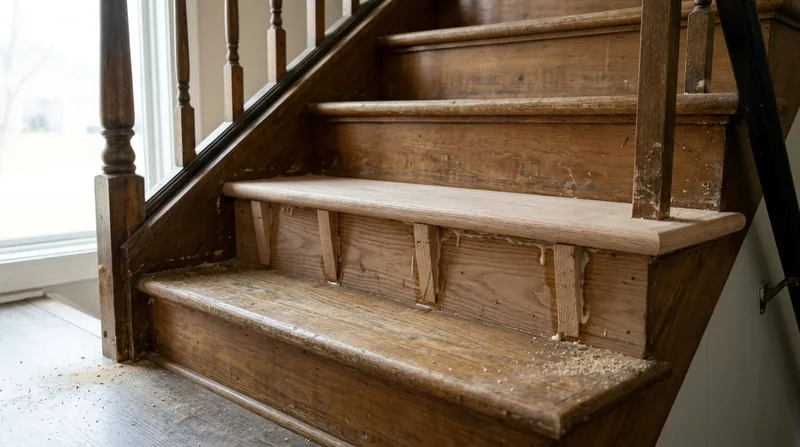




Stair & Railing Repair in Olathe is a routine but critical service in a city where split-levels and walkout-basement homes dominate the residential landscape. The freeze-thaw cycles, seasonal moisture swings, and the heavy clay foundation movement that characterize Johnson County mean that stairs settle, treads shift, and railings loosen year after year. Whether you're dealing with squeaky interior stairs in a 1970s raised ranch, a wobbly bannister in an Original Town Victorian, or a loose exterior staircase on a walkout deck, we repair and rebuild the stairs and railings Olathe homeowners depend on every day. We also restore period handrails, install code-compliant safety railings, and handle attic ladder installation and repair. The work is concrete: we measure, replace worn stringers, tighten loose balusters, and install or upgrade handrails to current code without replacing sound structure unnecessarily.
Why Stair & Railing Repair Matters in Olathe's Older and Newer Homes
Olathe's housing stock spans from late-1800s Victorian cottages around the courthouse square to 1950s brick ranches, 1970s split-levels with elevated decks, and modern reverse story-and-a-half homes with walkout basements. Every house type has stairs, and every staircase moves. The expansive clay beneath the city swells in spring and wet seasons, then shrinks during drought, causing foundation settlement that racks door frames and shifts stair stringers. Freeze-thaw cycles crack wood, moisture from ice dams and overflowing gutters seeps into rim joists and treads, and the constant seasonal movement loosens fasteners and joint connections. A loose bannister or squeaky tread is not cosmetic: it signals structural movement, and addressing it early prevents larger damage and keeps users safe.
- We tighten loose balusters and newel posts that have worked free from seasonal movement and foundation settling.
- We repair or replace worn stair stringers, treads, and risers without rebuilding the entire staircase when the structure is sound.
- We restore and refinish period railings and handrails in Victorian and Folk-era homes while preserving original detail.
- We install code-compliant handrails and safety railings on interior and exterior stairs, meeting current building code for height, grip diameter, and baluster spacing.
- We repair squeaky treads by securing fasteners, shimming stringers, and gluing and screwing loose joints from underneath.
Early repair of stair and railing issues prevents tripping hazards, stops wood damage from spreading, and preserves the character of older homes.
Local reality: A 1970s split-level in Havencroft with a loose interior bannister and squeaky treads typically needs tightening of balusters, new fasteners in the newel post, and shimming of the stringer from below. A walkout-deck exterior staircase on a home near Santa Fe may have a soft, damp ledger board where the stringer bolts to the rim joist, requiring ledger repair or replacement alongside stringer work. We assess each staircase on-site and propose repair before replacement.
How We Repair and Rebuild Stairs and Railings in Olathe
Stair repair begins with a careful inspection of the entire assembly: stringers, treads, risers, balusters, handrails, newel posts, and fasteners. We identify which parts have moved, loosened, or rotted, and which can be tightened, shimmed, or reinforced. For interior stairs, we often work from below, securing stringers to the floor structure and tightening or replacing fasteners without disturbing the finish above. For exterior stairs on walkout decks, we inspect the ledger board and rim joist where the stringer bolts to the house, as these connections often fail due to moisture and freeze-thaw stress. We handle each repair with the goal of restoring safety and function while preserving the original character of period homes.
- We inspect the entire stair assembly, including stringers, treads, risers, balusters, newel posts, and fasteners for movement, rot, and looseness.
- We tighten balusters and newel posts by removing loose fasteners, reinforcing joints with new bolts or lag screws, and shimming gaps with cedar shims.
- We repair squeaky treads by securing fasteners from below, gluing loose joints, and shimming stringers where they have pulled away from the floor or support structure.
- We replace individual worn treads or risers, matching wood species and finish to existing stairs whenever the stringers and structure are sound.
- We repair or replace ledger boards and rim joist connections on exterior deck stairs, addressing moisture damage and securing the stringer with proper bolts and flashing.
- We install or upgrade handrails and balusters to meet current building code for height, grip diameter, spacing, and load capacity.
- We restore period railings in Victorian and Folk-era homes, repairing turned balusters, newel posts, and handrails while preserving original detail and finish.
The result is a staircase that moves safely, sounds solid, and holds its character for years to come.
Example in Olathe: A 1920s Victorian cottage in Original Town has a grand interior staircase with turned balusters and a heavy newel post. The balusters have loosened from foundation movement and wood shrinkage. We remove and re-secure each baluster, reinforce the newel post connection to the stringers with new lag bolts, and refinish the handrail without replacing any original parts. The staircase is safe, stable, and retains its period character.
Stair & Railing Repair Methods and Approaches
| Approach | Description | Best for |
|---|---|---|
| Tightening and shimming | Remove loose fasteners, replace with new bolts or lag screws, and shim gaps with cedar shims to close movement and restore rigidity. | Loose balusters, newel posts, and stringers that have shifted from foundation settling or wood shrinkage. |
| Tread and riser replacement | Remove worn or rotted treads and risers, cut and fit new pieces to match existing wood species and finish, and secure with fasteners and glue. | Squeaky or soft treads, worn nosing, and localized rot when stringers and structure are sound. |
| Stringer repair and reinforcement | Inspect stringers for cracks, rot, or separation from support structure, reinforce with sistering boards or bolts, and secure to floor or ledger. | Cracked stringers, stringers that have pulled away from structure, and exterior stairs with soft ledger connections. |
| Handrail installation and upgrade | Install new handrails or upgrade existing ones to meet current code for height, grip diameter, and load capacity, with proper mounting brackets. | Stairs lacking compliant handrails, loose or undersized handrails, and safety upgrades for accessibility. |
| Period railing restoration | Repair and refinish turned balusters, newel posts, and handrails in Victorian and Folk-era homes, preserving original detail and avoiding unnecessary replacement. | Historic homes in Original Town and other older neighborhoods where character and authenticity matter. |
Stair & Railing Repair Cost in Olathe: What to Expect
Stair and railing repair in Olathe typically starts at $600 to $1,200 for straightforward tightening, shimming, and minor tread or riser repair. A complete staircase overhaul with new stringers, treads, risers, and handrail installation runs $2,500 to $5,000 or more, depending on the number of stairs, wood species, and whether the work is interior or exterior. Exterior deck stairs with ledger board and rim joist damage cost more because the structural connection to the house must be reinforced or replaced. Period railing restoration in older homes adds cost if turning is needed or if original hardware must be preserved.
Several factors affect the final price. The size and complexity of the staircase matter: a narrow interior staircase costs less than a grand Victorian staircase or a long exterior deck staircase. Access and working conditions count: stairs in a finished basement or behind built-in walls take longer. The type and extent of damage drive cost: a loose bannister is a quick fix, but a rotted stringer or soft ledger board requires structural repair. Whether you need a permit for structural work or handrail upgrades also adds to the timeline and cost. We recommend getting two or three estimates from local carpenters so you can compare scope, materials, and price. Our free estimate includes a detailed walkthrough and a clear breakdown of what we propose to repair or replace.
For a detailed pricing overview and examples, visit our full pricing page. Call (913) 355-6186 for a free, no-obligation estimate within 24 hours.
Stair & Railing Repair Near Me: What Olathe Homeowners Should Know When Hiring a Contractor
Finding a reliable stair and railing contractor in Olathe starts with checking that the company is fully insured and has a solid track record with residential carpentry. Ask to see proof of insurance and request references from recent stair or railing jobs in the area. A good contractor will explain the repair strategy clearly, show you the problem areas, and tell you honestly whether repair is enough or if replacement is necessary. Many stair issues can be fixed without a full rebuild, and a craftsman who repairs rather than replaces saves you money and preserves the character of your home.
Get multiple estimates so you can compare approach and price. The lowest bid is not always the best: a contractor who understands your home's age, the local climate, and the specific failure mode will give you a repair that lasts. If your staircase is in a historic district or your home is on a local landmark list, check whether your city or HOA has restrictions on exterior changes or railing materials. For structural work such as replacing stringers or adding a new handrail system, some jurisdictions require a permit, so ask your contractor whether one is needed and defer to your local building department for the rules in your area. Visit our contact page to request a free estimate, or call (913) 355-6186 to discuss your stair or railing issue with a carpenter who knows Olathe homes.
Stair & Railing Repair in Olathe: Pricing Guide
| Service | Price | Details |
|---|---|---|
| Tightening, shimming, and minor repairs | Starting at $600 | Loose balusters, newel posts, squeaky treads, and tightening fasteners without structural replacement of stringers or treads |
| Single or multiple tread and riser replacement | Starting at $1,200 | Worn or soft treads, risers, and nosing replacement when stringers are sound and species match existing stairs |
| Exterior deck staircase repair with ledger work | Starting at $1,800 | Exterior stairs with soft ledger board or rim joist damage requiring reinforcement or replacement alongside stringer work |
| Complete staircase rebuild or major handrail upgrade | On estimate | New stringers, treads, risers, balusters, newel posts, handrails, period restoration, or structural changes require on-site inspection and detailed proposal |
| Travel and estimate | Included and free | No mileage fee or call-out charge in Olathe and surrounding areas; free estimate response within 24 hours at (913) 355-6186 |
Indicative pricing, the exact cost depends on square footage, finish, and site access. Free personalized estimate within 24h at (913) 355-6186.


