Why Is My Floor Sagging? The Olathe Clay Soil Connection
If you've noticed your hardwood floors dipping or your doors hanging unevenly, you're not alone. Sagging floors are one of the most common structural complaints homeowners in Olathe experience, and the culprit is often hiding right beneath your home: expansive clay soil.
Olathe and the greater Kansas City region sit on layers of expansive clay that shrink and swell with changes in moisture content. During dry seasons, clay contracts, creating voids beneath your foundation. When heavy rains come (or when water from a damp basement seeps into the soil), the clay expands dramatically, pushing upward on your foundation and floor system. This constant movement stresses the structural members that support your floors, particularly the floor joists that run beneath your living spaces.
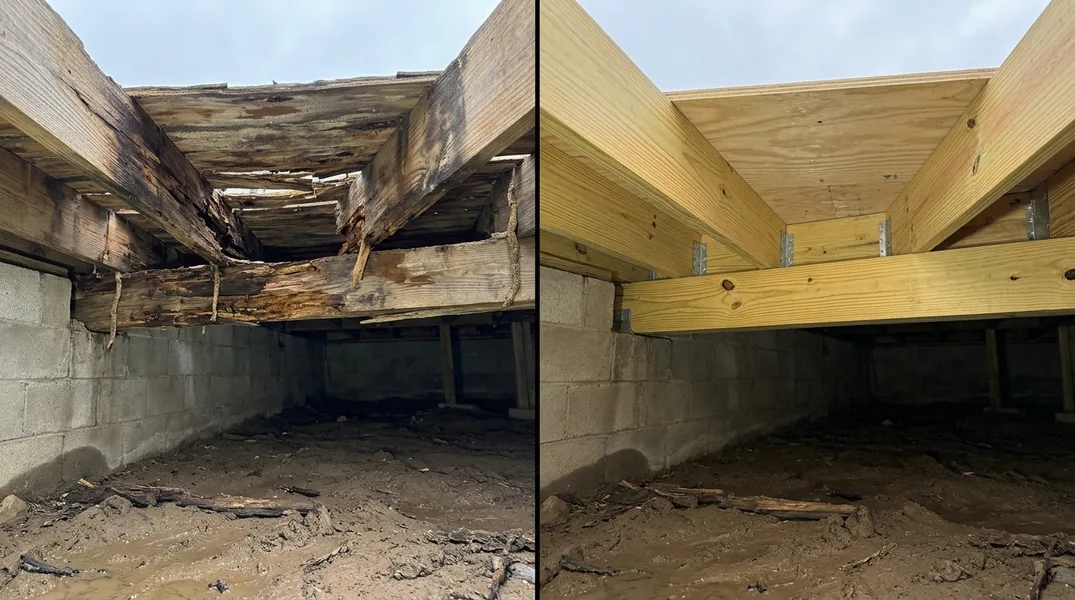
The problem compounds when moisture finds its way into your basement or crawl space. A damp basement doesn't just feel uncomfortable; it actively damages the wood structures that bear your home's weight. This is where Wood Rot & Dry Rot Repair becomes essential. When floor joists absorb moisture from below, they begin to soften, lose strength, and eventually fail. The combination of expansive soil movement and wood decay creates the perfect storm for sagging floors.
How Damp Basements Accelerate Floor Joist Damage
Your basement or crawl space is the foundation of your home's structural integrity, yet many homeowners overlook moisture problems in these areas until floors start to sag. A damp basement creates an environment where wood decay thrives. Floor joists sitting just above a wet crawl space absorb moisture like a sponge, and once wood moisture content exceeds 20%, fungal growth begins. Dry rot and wood rot spread silently, weakening joists from the inside out while the damage remains invisible from above.
The timeline for this damage varies depending on humidity levels and wood species, but in many cases, noticeable sagging can develop within just a few years of persistent moisture exposure. By the time you feel the floor move beneath your feet, the structural damage is often advanced. This is why addressing basement moisture isn't just about comfort or energy efficiency; it's a critical part of protecting your home's structural skeleton. If you suspect moisture problems in your basement, having a professional inspection is the first step toward prevention.
Understanding Floor Joist Repair and Sistering Floor Joists
Once sagging floors are diagnosed, the solution depends on the extent of damage. Floor Joist & Subfloor Repair is the standard approach for addressing compromised joists, and one of the most effective methods is called sistering. Sistering floor joists involves installing a new, structurally sound beam alongside a damaged or weakened joist and fastening them together securely. This reinforces the weakened member and restores load-bearing capacity without requiring the entire joist to be removed.
The sistering process begins with a thorough assessment of the damage. A professional carpenter will evaluate how much of the joist is compromised, whether the damage is concentrated in one area or spread across the length, and whether the joist can be salvaged at all. In many cases where rot is limited to the bottom edge or a localized section, sistering is ideal. The new sister joist is cut to the appropriate length, positioned tightly against the damaged joist, and bolted together at intervals. This distributes the load between the old and new members, effectively doubling the support capacity in that span.
For more severe damage where rot extends deep into the joist or affects its structural core, full joist replacement may be necessary. Your carpenter will determine the best approach based on the specific conditions in your home. Either way, the goal is to restore your floor to level and ensure it remains stable for decades to come.
Expansive Clay Soil in Kansas: Understanding the Foundation Problem
Expansive clay soil is a geological reality across much of Kansas and Missouri, and understanding how it works helps explain why sagging floors are so common in the region. Clay minerals have a unique property: they absorb water molecules between their crystalline layers, causing the soil to expand. When that moisture evaporates during dry periods, the soil contracts. A single cycle of wetting and drying can cause vertical movement of several inches in extreme cases, and over years, this repeated movement creates cumulative stress on your foundation and floor system.
The problem is particularly acute in homes built on shallow foundations or those where the soil has been disturbed during construction. When a builder excavates for a basement or crawl space, the exposed clay is more prone to moisture infiltration. Additionally, landscaping decisions matter. If your gutters dump water near your foundation, or if grade slopes toward your house rather than away, you're accelerating the clay's expansion cycle. Many homeowners don't realize that their own watering habits (overwatering landscaping near the house) can trigger the very soil movement that damages their floors.
Managing expansive clay means controlling moisture. Proper drainage, functioning gutters, appropriate grading, and a dry basement all reduce the stress on your foundation and floor system. When combined with structural repairs to damaged joists, these preventive measures can stop sagging floors from worsening and prevent new damage from developing.
Floor Joist & Subfloor Repair Near Me: When to Call a Professional
Recognizing the signs of floor joist damage early can save you thousands of dollars in repairs. Common warning signs include visible sagging or bouncing in the floor, doors that stick or swing open on their own, cracks appearing in drywall or plaster, or a musty smell in your basement or crawl space. If you notice any of these issues in your Olathe home, don't wait. The longer damaged joists support your home's weight, the more they weaken, and the greater the risk of catastrophic failure.
A professional structural assessment is the only way to know whether your sagging floors are caused by joist damage, foundation settlement, or a combination of factors. Olathe Carpentry specializes in identifying and repairing these issues. During an inspection, we examine the joists, check for moisture and rot, assess foundation movement, and evaluate the overall structural health of your home. We'll explain what we find in terms you can understand and recommend the most cost-effective solution for your situation. If you've noticed sagging floors, call us at (913) 355-6186 or request a free estimate today.
Preventing Future Sagging: Moisture Control and Maintenance
The best approach to sagging floors is prevention. Once you've invested in Floor Joist & Subfloor Repair, protecting your investment means addressing the root causes. Start with your basement or crawl space. Install a sump pump if you don't have one, ensure your gutters and downspouts direct water at least 6 feet away from your foundation, and consider a vapor barrier on your crawl space floor to reduce moisture wicking. These simple steps dramatically reduce the humidity that triggers wood rot.
Regular inspections are equally important. Once a year, take a flashlight down to your basement or crawl space and look for signs of moisture, mold, or soft wood. Catch problems early, and they're manageable. Ignore them, and you're looking at major structural repairs. Additionally, maintain your home's exterior. Caulk gaps around windows and doors, repair roof leaks promptly, and keep your landscaping from trapping moisture against your foundation. These habits protect not just your floors but your entire home's structural integrity.
If you're concerned about your home's foundation or floors, Olathe Carpentry is ready to help. Our team understands the unique challenges that expansive clay soil and Kansas weather present to homeowners. Contact us at (913) 355-6186 or visit our website to learn more about our services and pricing.
Looking for a professional carpentry contractor in Olathe? Olathe Carpentry responds fast for all your carpentry needs.
Get a Free QuoteOur services: Wood Rot & Dry Rot Repair · Termite Damage Repair · Floor Joist & Subfloor Repair