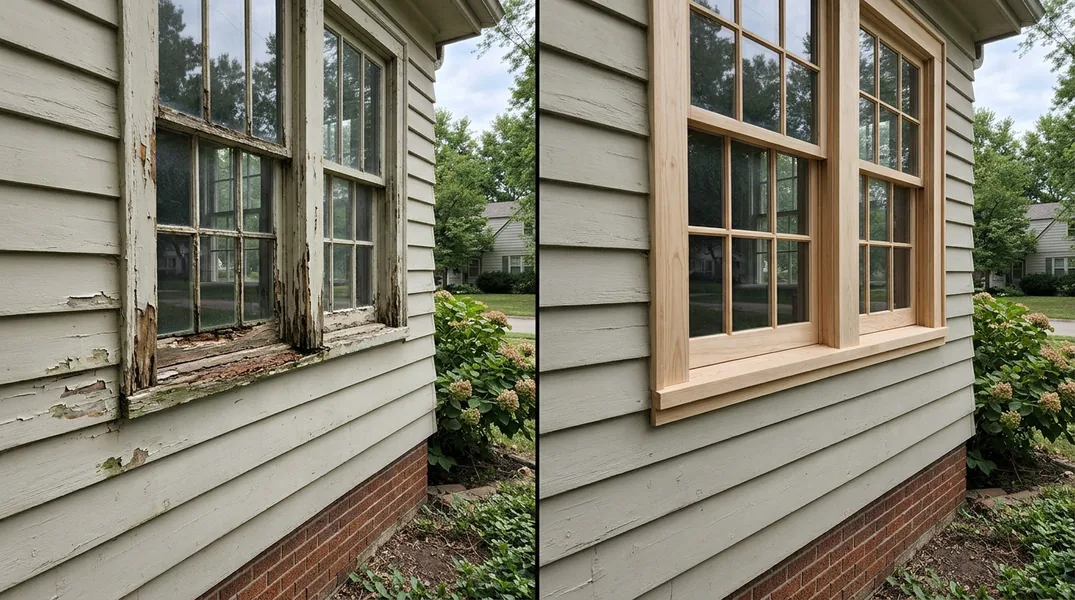
Two Homes, Two Wood Maintenance Realities
If you own an original Victorian in Olathe, you're steward to a piece of history. If you live in a 1970s split-level, you're managing a home built with different materials and construction methods altogether. Both house types can develop serious wood damage over time, but the causes, warning signs, and repair approaches differ significantly. Understanding your home's vulnerabilities is the first step toward protecting your investment and avoiding emergency repairs down the road.
Victorian homes were built to last generations. Their solid wood framing, plaster walls, and heavy timber joists represent craftsmanship that's rarely seen today. However, that age also means decades of weather exposure, outdated moisture barriers, and wood that's grown brittle and susceptible to decay. Split-level homes, by contrast, were constructed with different priorities: economy, speed, and the building materials available in the 1970s. Many relied on hardboard siding, engineered wood products, and less robust exterior protection. This means a 1970s split-level may face wood rot challenges that look and behave very differently from those threatening a Victorian.
Historic Home Repair in Olathe: Preserving Victorian Integrity
Victorian homes demand respect for their original design while addressing modern durability concerns. The wood siding on these older homes was typically solid lumber, often thicker and more rot-resistant than modern alternatives, but it's also more prone to damage from poor maintenance. Olathe homeowners with Victorians often face cracked paint, missing caulk, and exposed wood grain that absorbs moisture like a sponge. Over time, this moisture penetration leads to soft spots, discoloration, and the telltale signs of decay.
The challenge with historic home repair is balancing preservation with practicality. You don't want to strip away original character by replacing hand-cut trim with modern vinyl, yet you also need your home to be weather-tight and structurally sound. This is where professional assessment becomes invaluable. Wood Rot & Dry Rot Repair specialists can evaluate whether damage is cosmetic surface rot that can be stabilized and refinished, or whether deeper structural damage requires selective wood replacement. Many Victorian repairs can be completed using traditional methods and materials that honor the home's original construction, even as they extend its lifespan by decades.
Split-Level Homes and Hardboard Siding Replacement: Facing 1970s Construction Realities
The 1970s brought us a lot of things, and not all of them have aged well. Hardboard siding, which was heavily used on split-level and ranch homes built during that era, is particularly vulnerable to moisture damage and rot. Unlike solid wood, hardboard is a composite material made from wood fibers and resin, which makes it more susceptible to water absorption and deterioration when the protective paint coating fails. Many split-level homes in the region are now experiencing widespread hardboard failure after 40 to 50 years of exposure to Kansas weather patterns, including freeze-thaw cycles and intense summer humidity.
If your split-level has original or aging hardboard siding, wood siding repair isn't always a simple cosmetic touch-up. Soft spots, swelling, and delamination indicate that moisture has penetrated the material, and once that happens, replacement is often the most cost-effective solution. Hardboard siding replacement allows you to upgrade to more durable materials like fiber cement board, engineered wood, or even traditional wood siding while maintaining the home's original aesthetic. The good news is that addressing this issue now prevents more expensive structural damage to the wall framing and substructure beneath.
Wood Rot & Dry Rot Repair Near Me: When to Call a Professional
Not every soft spot or discolored patch of wood requires professional intervention, but knowing the difference can save you thousands of dollars. Dry rot, which occurs when wood loses moisture and begins to shrink and crack in a distinctive cubic pattern, is often less immediately dangerous than wet rot, which spreads rapidly and can compromise structural integrity within months. Wet rot thrives in damp conditions and is particularly common in basements, crawl spaces, and around poorly sealed exterior joints. If you notice a musty smell, soft spongy wood, or visible fungal growth, you're likely dealing with active decay that demands immediate attention.
The challenge for homeowners is that early-stage rot can hide behind paint, siding, or trim. By the time you see obvious damage on the surface, the problem may extend well into the framing. This is why a professional inspection is worth the investment. A trained carpenter can use moisture meters, probing tools, and visual inspection to identify decay before it becomes catastrophic. In Olathe, Olathe Carpentry offers thorough assessments that identify the full scope of damage and recommend targeted repairs. Whether you need localized wood replacement, surface stabilization, or more extensive structural work, a professional diagnosis prevents costly guesswork and ensures the repair actually solves the problem rather than just masking it.
Understanding the Scope: From Surface Repairs to Structural Fixes
Wood rot repair isn't one-size-fits-all. Surface rot, where decay is limited to the outer layer of wood, might be addressed through careful removal of damaged material, wood hardener application, and refinishing. This approach works well for decorative trim, fascia boards, and siding where structural load isn't a concern. However, if rot has penetrated into load-bearing elements like rim joists, floor joists and subfloors, or structural beams, the repair becomes significantly more complex and costly. Structural rot requires partial or complete wood replacement, temporary support systems during work, and often building permits to ensure the repair meets current code standards.
The distinction matters because it determines both the cost and the urgency of repair. A soft corner on a Victorian porch post can often wait a season or two if budget is tight, though waiting does risk the problem spreading. Rot in a basement rim joist or under a kitchen sink, by contrast, demands immediate action because it's actively compromising the home's structural stability. When you're evaluating repair options, ask the contractor to clearly explain whether the damage is cosmetic, functional, or structural. This clarity helps you prioritize repairs and plan your budget realistically. If you're unsure about the severity of wood damage in your home, Olathe Carpentry can provide a free estimate to assess the situation and outline your options.
Planning Your Maintenance Strategy: Prevention and Budgeting
The best wood rot repair is the one you never need. Prevention through consistent maintenance costs far less than structural repairs. For Victorian homes, this means keeping paint and caulk in good condition, ensuring gutters and downspouts direct water away from the foundation and siding, and addressing any roof leaks immediately. For split-level homes, regular inspection of hardboard siding for soft spots, maintaining proper grading around the foundation, and ensuring crawl spaces stay dry are critical. Both home types benefit from proper ventilation, which prevents moisture buildup in attics, crawl spaces, and wall cavities where rot thrives.
When budgeting for wood maintenance, assume you'll encounter some decay issues over the life of home ownership. Setting aside funds for periodic professional inspections and targeted repairs is far smarter than hoping for the best and facing an emergency situation. If you discover active rot or extensive damage, getting multiple professional assessments helps you understand the true scope and pricing for the work. Olathe Carpentry serves homeowners throughout the region and can be reached at (913) 355-6186 to discuss your specific situation. Whether you own a beautifully preserved Victorian or a practical 1970s split-level, professional guidance ensures your wood repair investment protects your home for decades to come.
Looking for a professional carpentry contractor in Olathe? Olathe Carpentry responds fast for all your carpentry needs.
Get a Free QuoteOur services: Wood Rot & Dry Rot Repair · Termite Damage Repair · Floor Joist & Subfloor Repair